
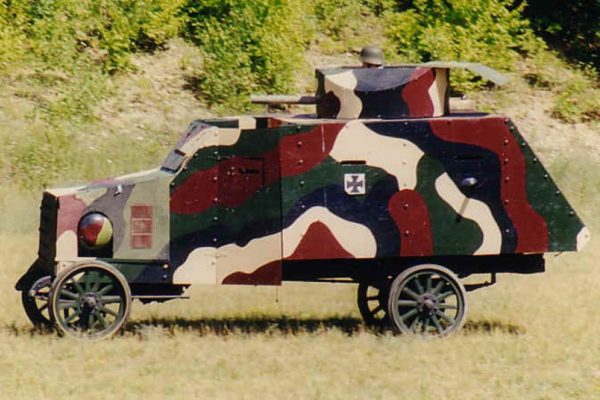
The Aerodrome’s Armored Car started out its long life as an apple truck. All that remained of the vehicle by the 1960s was the chassis so it was modified to serve as an ambulance in our Sunday shows for many years. When we acquired our Columbia Ambulance the Maxwell was again modified, this time to […]
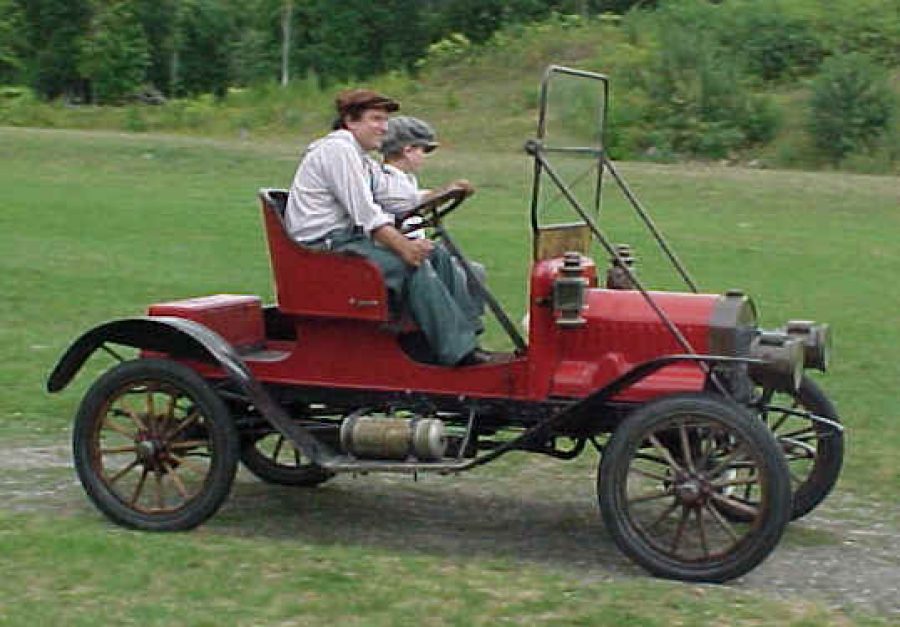
Maxwell Runabout
Year: 1910
The Maxwell Runabout was introduced in 1908. It was recommended to “the doctor, lawyer, contractor, city and suburban salesman, builder, businessman; in fact to everyone whose needs not exceed economical, safe and speedy transportation for two.” The two-cylinder 14 HP model LD sold for $825. Later the Maxwell Company became part of the well-known Chrysler […]
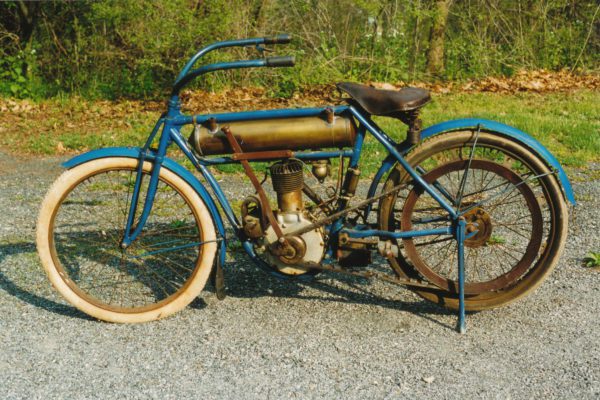
Merkel Light Motorbike
Year: 1909
From 1902 through 1922 Merkel enjoyed success with well-designed motorbikes and motorcycles using single cylinder and “V” twin engines up to 986 cc. Eventually Merkel was purchased by Indian and their doors were forever closed.
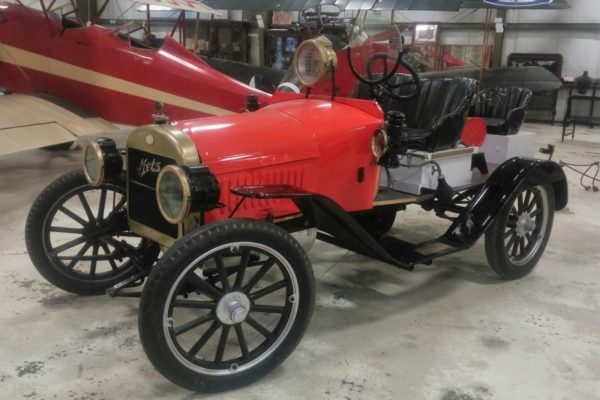
Metz
Year: 1912
The Metz was advertised as the winner of the Glidden Tour. This tour was an eight-day competition of endurance over challenging terrain. The Metz was also known as the “Gearless Car” with “No clutch to slip – no gears to strip.” Under ordinary conditions a Metz driver could travel anywhere from 28 to 82 miles […]
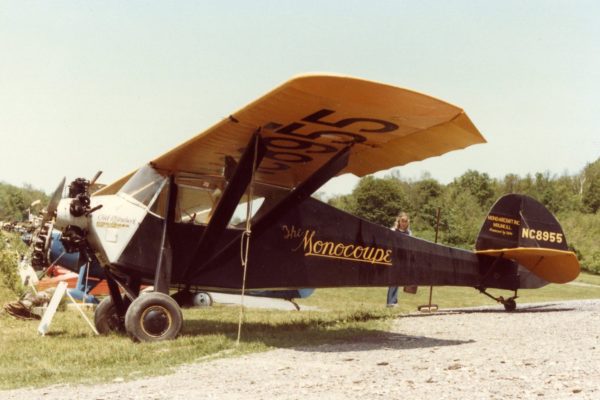
Monocoupe 113
Country: United States
Year: 1929
Engine: Velie
Horsepower: 60
Wingspan: 32 '
Top Speed: 98 mph (157 km/hr)
Gr. Weight: 1350 lbs (612 kg)
Original/Reproduction: Original
Year: 1929
Engine: Velie
Horsepower: 60
Wingspan: 32 '
Top Speed: 98 mph (157 km/hr)
Gr. Weight: 1350 lbs (612 kg)
Original/Reproduction: Original
The Model 113 Monocoupe was a major development as it is the first popular production aircraft fitted with a cabin and two seats. The design would continue to improve with higher horsepower, more reliable engines and greater pilot comfort. This example was restored and flown at the Aerodrome, put on static display, and is now undergoing another restoration.
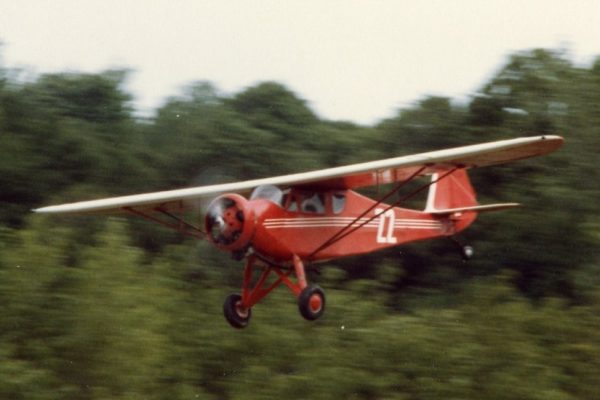
Monocoupe 90
Country: United States
Year: 1931
Engine: Lambert
Horsepower: 90
Wingspan: 32 '
Top Speed: 120 mph (192 km/hr)
Gr. Weight: 1490 lbs (676 kg)
Original/Reproduction: Original
Year: 1931
Engine: Lambert
Horsepower: 90
Wingspan: 32 '
Top Speed: 120 mph (192 km/hr)
Gr. Weight: 1490 lbs (676 kg)
Original/Reproduction: Original
The Monocoupe 90 was a slightly larger and more powerful version of the popular, two place, high wing, cabin monoplane. It retained the signature, graceful double taper of the fuselage top and bottom. About 324 were built and the design continued to evolve with more horsepower and sophistication. Our example, formerly raced by Phoebe Omlie, joined the collection in the mid-70s and flew for several years before being put on static display.
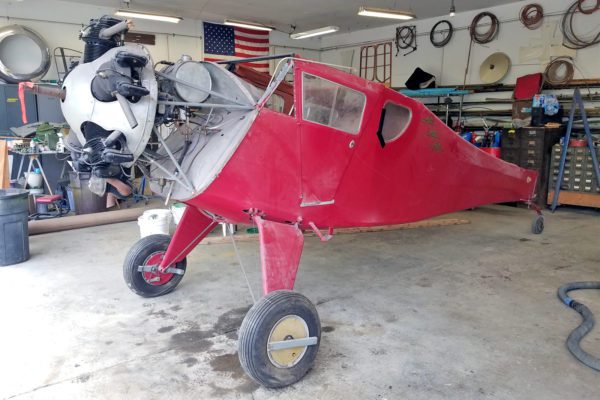
Monocoupe 90-J
Country: United States
Year: 1931
Engine: Warner Scarab Jr.
Horsepower: 90
Wingspan: 32 '
Top Speed: 120 mph (192 km/hr)
Gr. Weight: 1511 lbs (685 kg)
Original/Reproduction: Original
Year: 1931
Engine: Warner Scarab Jr.
Horsepower: 90
Wingspan: 32 '
Top Speed: 120 mph (192 km/hr)
Gr. Weight: 1511 lbs (685 kg)
Original/Reproduction: Original
The Monocoupe 90 was a slightly larger and more powerful version of the popular, two place, high wing, cabin monoplane. It retained the signature, graceful double taper of the fuselage top and bottom. About 324 were built and the design continued to evolve with more horsepower and sophistication.
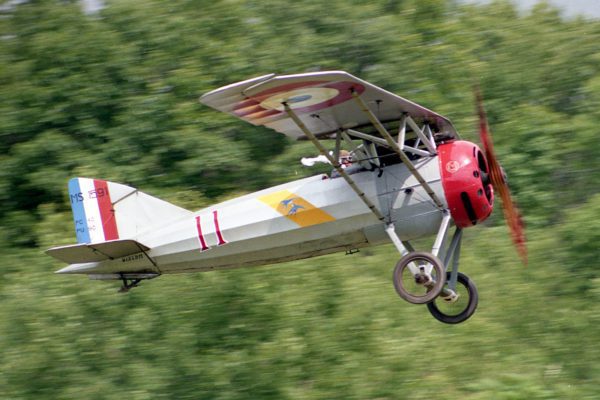
Morane-Saulnier A-I
Country: France
Year: 1917
Engine: Gnome Rotary
Horsepower: 160
Wingspan: 27 ' 10"
Top Speed: 129 mph (207 km/hr)
Gr. Weight: 1433 lbs (650 kg)
Original/Reproduction: Original
Year: 1917
Engine: Gnome Rotary
Horsepower: 160
Wingspan: 27 ' 10"
Top Speed: 129 mph (207 km/hr)
Gr. Weight: 1433 lbs (650 kg)
Original/Reproduction: Original
The Morane-Saulnier A.I. was accepted by the French military in early 1917 and produced in large numbers. While pilots liked the flight characteristics, it was relegated to use as a trainer because of alleged structural failures. Alfred Fronval cast doubt on the issue when he completed 1,111 consecutive loops in one following the War. This A.I. was restored in 1985 and flew in our shows for several years.
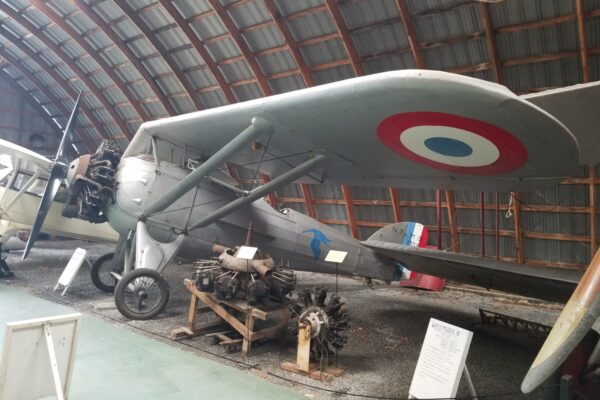
Morane-Saulnier MS.130
Country: France
Year: 1927
Engine: Salmson
Horsepower: 230
Wingspan: 35 ' 1"
Top Speed: 130 mph (209 km/hr)
Gr. Weight: 2528 lbs (1147 kg)
Original/Reproduction: Original
Year: 1927
Engine: Salmson
Horsepower: 230
Wingspan: 35 ' 1"
Top Speed: 130 mph (209 km/hr)
Gr. Weight: 2528 lbs (1147 kg)
Original/Reproduction: Original
Morane Saulnier produced aircraft through the Pioneer, WWI, Golden Age eras and into current times. The MS.130 is a parasol monoplane, designed for military applications. A one-off modification won the 1929 Coupe Michelin at 120 miles per hour.
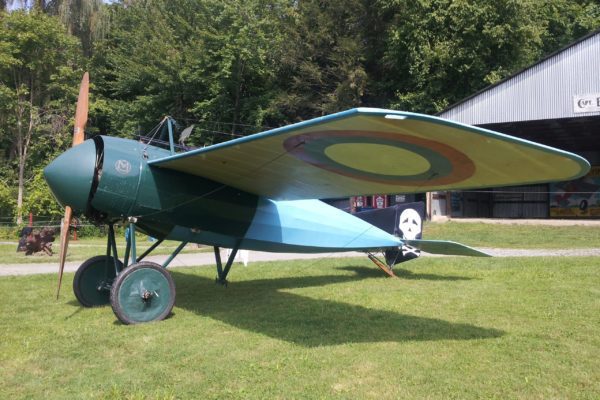
Morane-Saulnier N
Country: France
Year: 1914
Engine: Le Rhone Rotary
Horsepower: 80 - 100
Wingspan: 27 ' 3"
Top Speed: 103 mph (165 km/hr)
Gr. Weight: 1122 lbs (509 kg)
Original/Reproduction: Reproduction
Year: 1914
Engine: Le Rhone Rotary
Horsepower: 80 - 100
Wingspan: 27 ' 3"
Top Speed: 103 mph (165 km/hr)
Gr. Weight: 1122 lbs (509 kg)
Original/Reproduction: Reproduction
The Morane Saulnier N, “Bullet” was advanced for 1914, when most designs were pusher biplanes. It was fitted with triangular blades on the back of the propeller which deflected machine gun bullets fired through the arc of the propeller. Famed French Aviator Roland Garros went down behind enemy lines in a Bullet and could not destroy it before his capture. The aircraft was turned over to Anthony Fokker, who quickly produced a superior “synchronous” design. Our Bullet uses an original M. S. A-I fuselage and newly fabricated wings.